
By Sudish World Solutions Private Limited
Bananas are one of the most widely enjoyed fruits around the world. They are commonly available in grocery stores, served at breakfast and often chosen as a convenient snack before or after physical activity. But what makes bananas an interesting fruit from a nutrition and food-product perspective?
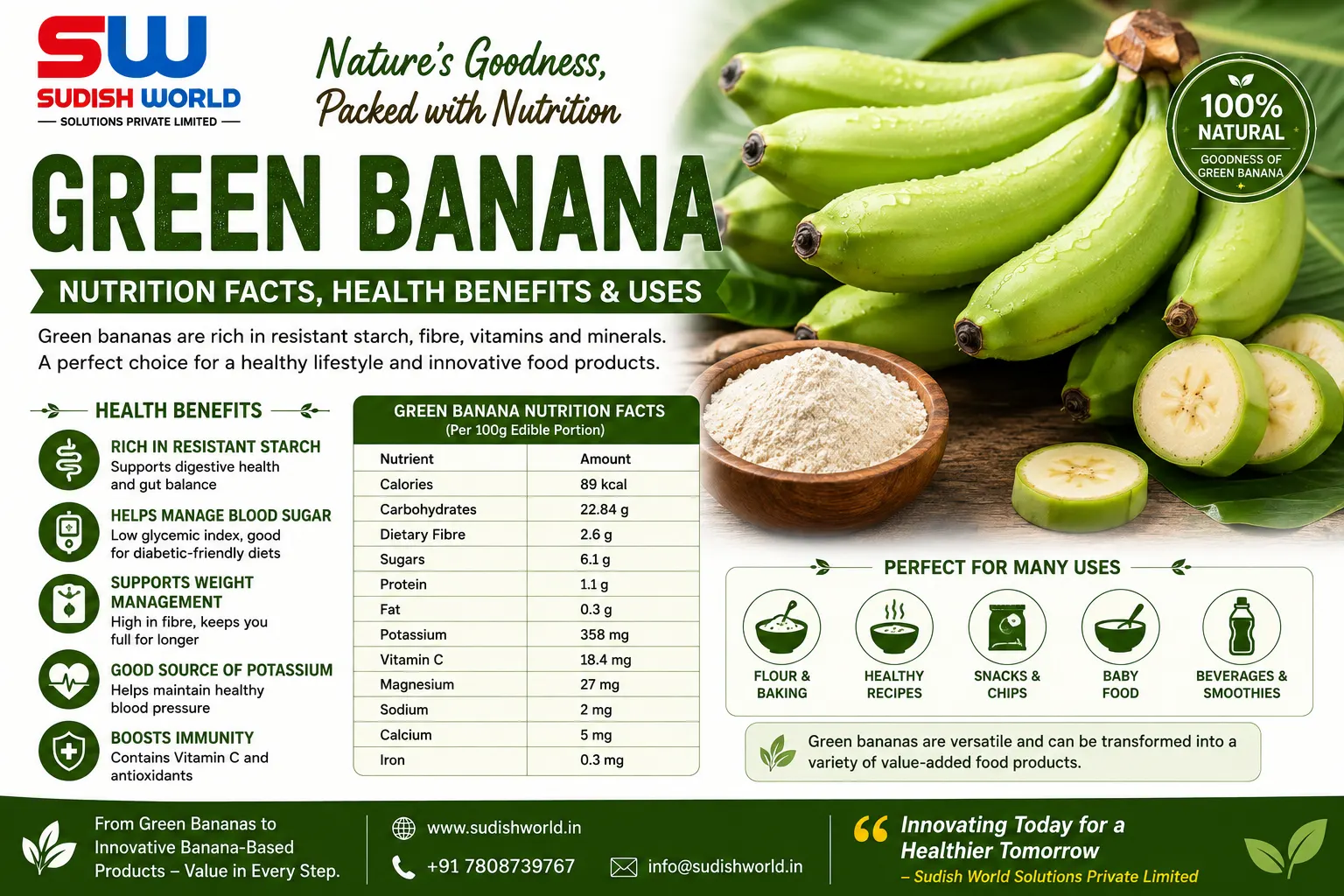
Bananas contain carbohydrates, dietary fibre, naturally occurring sugars, potassium, vitamin C, magnesium and other nutrients. Green bananas also contain resistant starch, a type of carbohydrate that behaves differently from regular starch during digestion.
At Sudish World Solutions Private Limited, we are interested in banana-based food products, value-added agricultural solutions and innovative applications of banana as a food ingredient.
Banana Nutrition Facts
One medium-sized banana weighing approximately 118 g provides about 105 calories. The following table presents the nutrition information provided for a medium banana:
| Nutrient | Amount per Medium Banana (118 g) |
|---|---|
| Calories | 105 kcal |
| Fat | 0.4 g |
| Sodium | 1.2 mg |
| Carbohydrates | 27 g |
| Dietary Fibre | 3.1 g |
| Sugars | 14.4 g |
| Protein | 1.3 g |
| Potassium | 422 mg |
| Vitamin C | 10.3 mg |
| Magnesium | 31.9 mg |
Carbohydrates in Bananas
A medium banana contains approximately 27 g of carbohydrates. These carbohydrates include dietary fibre and naturally occurring sugars.
Green bananas contain more resistant starch. As bananas ripen, some of the resistant starch changes into sugars. Therefore, a yellow banana with brown spots may contain more sugar and less resistant starch than a green banana of the same size.
Banana Carbohydrate Profile
| Component | Amount per Medium Banana |
|---|---|
| Total Carbohydrates | 27 g |
| Dietary Fibre | 3.1 g |
| Naturally Occurring Sugars | 14.4 g |
| Resistant Starch | Higher in greener bananas |
Fat Content in Bananas
Bananas are naturally low in fat. A medium-sized banana contains approximately 0.4 g of fat.
Bananas are often paired with foods containing healthy fats, such as nuts, seeds or nut butters, depending on individual dietary preferences.
Banana Protein
Bananas contain a relatively small amount of protein. A medium banana provides approximately 1.3 g of protein.
When used as part of a snack or breakfast, bananas can be combined with other protein-containing foods to create a more balanced meal or snack.
Vitamins and Minerals in Bananas
Bananas are particularly known for their potassium content. They also provide vitamin C, magnesium and other micronutrients.
| Vitamin / Mineral | Amount per Medium Banana |
|---|---|
| Potassium | 422 mg |
| Vitamin C | 10.3 mg |
| Magnesium | 31.9 mg |
Calories in Bananas Compared With Other Fruits
A medium banana contains approximately 105 calories. For comparison, the following values show the calorie amounts provided for several commonly eaten fruits:
| Fruit | Serving | Approximate Calories |
|---|---|---|
| Banana | 1 medium (118 g) | 105 kcal |
| Gala Apple | 1 medium | 61 kcal |
| Navel Orange | 1 medium | 72.8 kcal |
| Red Seedless Grapes | 1 cup (150 g) | 129 kcal |
Banana Nutrition Summary
Bananas provide carbohydrates, dietary fibre, naturally occurring sugars, potassium, vitamin C and magnesium. Their convenient size and naturally sweet flavour make them suitable for many everyday food applications.
Banana Health Benefits
Bananas are popular not only because of their taste and convenience but also because of their nutritional composition. Their carbohydrate, fibre, potassium and micronutrient content makes them an interesting addition to a balanced diet.
1. Green Bananas and Resistant Starch
Green bananas contain resistant starch, which behaves similarly to fibre during digestion. Green bananas can also be processed into banana pulp, flour and other food ingredients for use in different food-product concepts.
Research has explored green banana flour and its potential relationship with insulin sensitivity, weight management and other metabolic outcomes. However, individual health effects can vary and banana products should not be considered a substitute for medical treatment.
2. Supports Digestive Health
Bananas provide dietary fibre and naturally occurring prebiotic components. These can form part of a balanced diet that supports normal digestive function.
Green bananas, because of their resistant starch content, have also been studied for their potential role in digestive health.
3. Can Support Healthy Eating and Weight Management
Bananas are relatively convenient and provide dietary fibre along with naturally occurring carbohydrates. Including fruit such as bananas in meals and snacks may help create satisfying food choices as part of an overall balanced eating pattern.
Weight management depends on the overall diet, physical activity and individual circumstances rather than one particular food.
4. Potassium and Healthy Blood Pressure
Bananas are a source of potassium. Potassium is an essential mineral involved in several normal functions of the body and is an important component of a balanced diet.
A medium banana provides approximately 422 mg of potassium according to the nutrition information presented in this article.
5. Vitamin C and Normal Skin Function
Bananas provide vitamin C, which is involved in normal collagen formation and other physiological functions.
Banana peels have also been used traditionally in some folk practices. However, traditional uses should not be treated as established medical treatments.
Banana Allergies
Banana allergies are possible, although they are not considered common. Some individuals may experience oral allergy syndrome, in which reactions to certain pollens can cross-react with particular fruits.
Banana allergy can also be associated with latex allergy in some people. Possible allergic reactions can include itching, hives, vomiting, breathing difficulties and, in severe cases, anaphylaxis.
Possible Adverse Effects
Bananas are generally well tolerated by many people. However, increasing dietary fibre quickly can sometimes cause digestive discomfort in individuals who are not accustomed to higher fibre intake.
Gradually increasing fibre intake and maintaining adequate hydration can help the body adjust to changes in dietary fibre.
Different Banana Varieties
Bananas are available in many different varieties around the world. Cavendish bananas are among the most widely traded varieties, while plantains represent another important group of banana-related crops.
| Banana Type | General Characteristics |
|---|---|
| Cavendish | One of the most widely consumed and commercially traded banana types. |
| Plantain | Commonly used in cooked food preparations and available in many varieties. |
| Green Banana | Firmer and generally higher in resistant starch than ripe yellow bananas. |
| Ripe Banana | Softer and sweeter, with some resistant starch converted into sugars during ripening. |
When Are Bananas Best?
Bananas can be purchased throughout the year. Buying bananas at different stages of ripeness allows consumers to choose between firmer green fruit and softer, sweeter ripe fruit.
Green bananas can be allowed to ripen naturally at room temperature until they reach the preferred level of softness and sweetness.
Banana Storage and Food Safety
Bananas change from green to yellow and eventually brown as they ripen. Green bananas can be kept at room temperature to continue ripening.
Once bananas reach the desired ripeness, they can be refrigerated to extend their usable period. The peel may become darker in the refrigerator while the fruit inside remains suitable for consumption if properly stored.
Ripe bananas can also be peeled, sliced or mashed and stored in airtight freezer-safe containers or bags for later use in smoothies and baking.
How to Prepare and Enjoy Bananas
Bananas can be enjoyed in many simple ways. Sliced banana can be added to oatmeal, yogurt, cereal or other breakfast foods.
Mashed banana can also be used in baking recipes or combined with other ingredients to create snacks and desserts.
Frozen bananas can be blended into smooth dessert-style preparations and can also be added to smoothies.
Can You Eat Banana Peel?
Banana peels are used in some vegan and culinary recipes. However, they can be tougher and more difficult to digest than the fruit itself.
If banana peel is used as a food ingredient, it should be handled and prepared appropriately, with attention to cleanliness and food safety.
Banana as a Value-Added Food Ingredient
Bananas offer opportunities beyond fresh-fruit consumption. They can be processed into a variety of value-added products and ingredients, including banana powder, banana flour, banana chips, banana pulp and other innovative food products.
| Banana Product | Possible Food Applications |
|---|---|
| Fresh Banana | Breakfasts, smoothies, snacks and desserts. |
| Banana Powder | Smoothies, bakery products, beverages, snacks and food formulations. |
| Banana Flour | Baking, flour blends and selected food-product formulations. |
| Banana Chips | Snack products and value-added food applications. |
| Banana Pulp | Beverages, food preparations and product development. |
Banana Innovation at Sudish World Solutions Private Limited
At Sudish World Solutions Private Limited, we are exploring the potential of bananas as a source of innovative, value-added food products and agricultural solutions.
From fresh bananas to banana powder, flour, pulp, chips and other applications, banana processing can create opportunities for product diversification and food innovation.
Our focus is on exploring practical and innovative ways to add value to agricultural resources while developing useful food-product concepts.
Conclusion
Bananas are a convenient and versatile fruit containing carbohydrates, dietary fibre, naturally occurring sugars, potassium, vitamin C and magnesium. Green bananas also provide resistant starch, which makes them particularly interesting for food-product research and development.
Bananas can be enjoyed fresh or transformed into value-added products such as banana powder, banana flour, chips and pulp. Their versatility makes them useful for both everyday food preparation and innovative product development.
Sudish World Solutions Private Limited continues to explore banana-based products, food innovation and value-added agricultural solutions.
Discover more insights, products and innovative food solutions from Sudish World Solutions Private Limited.